Meet the new Cleft cabinet
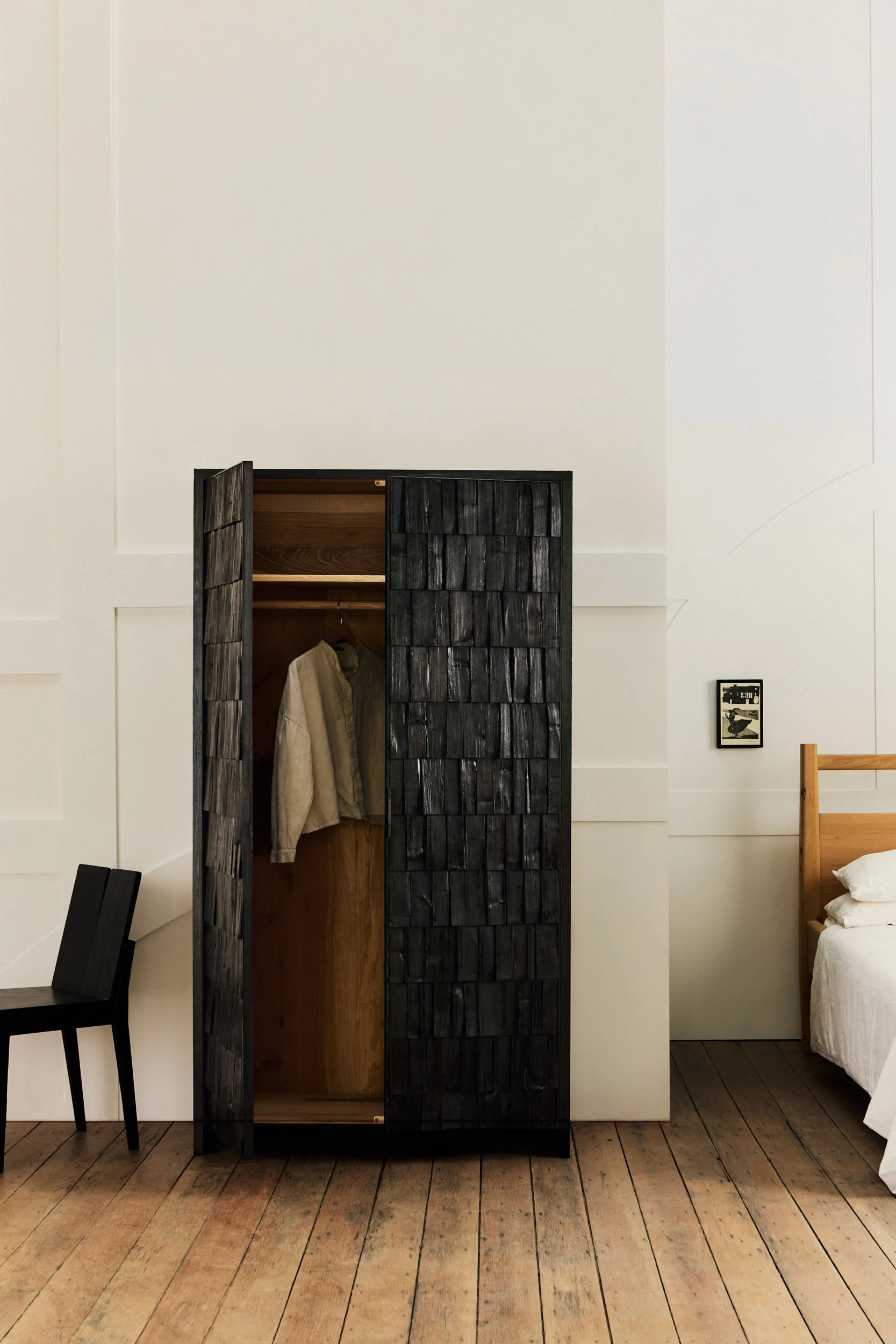
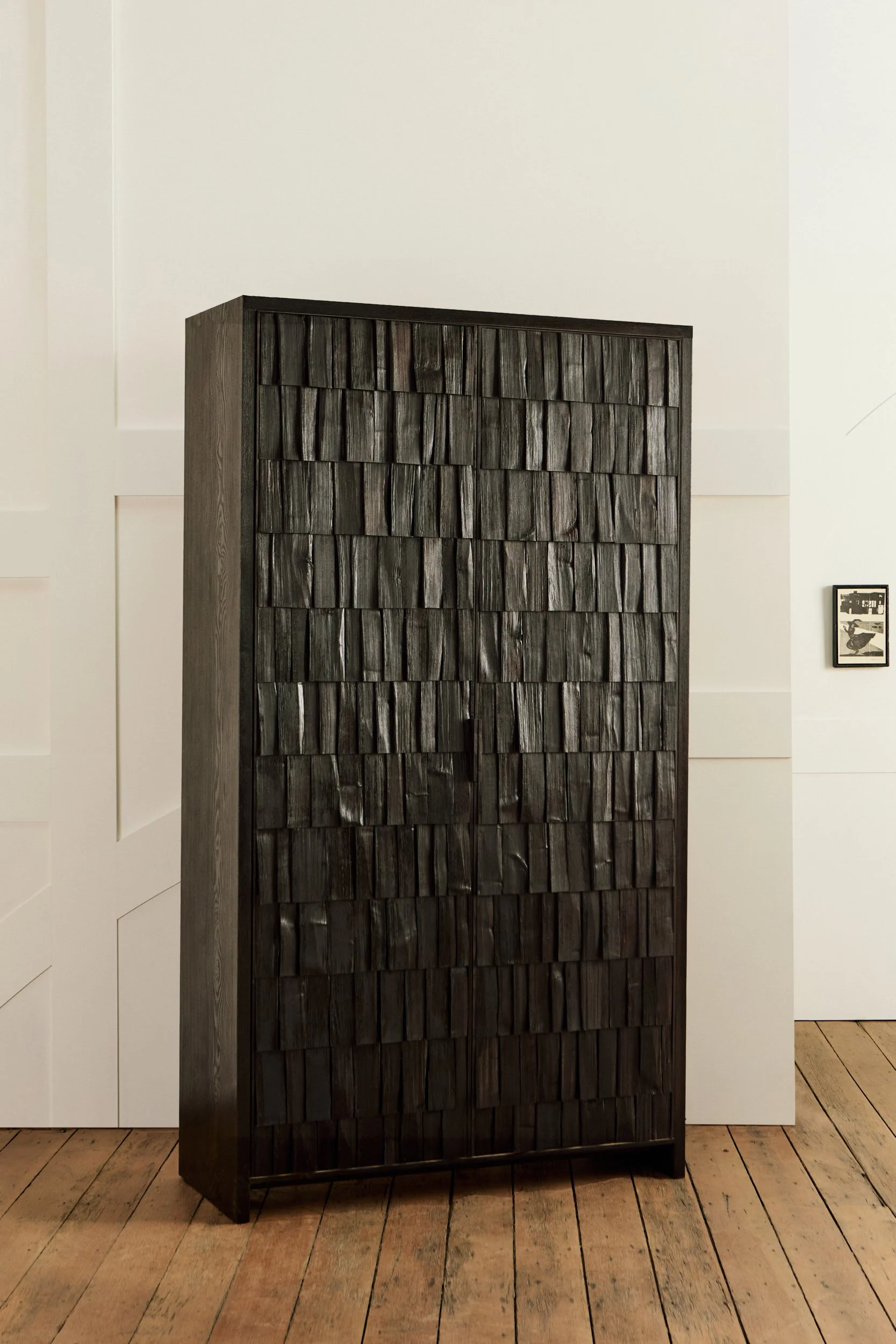
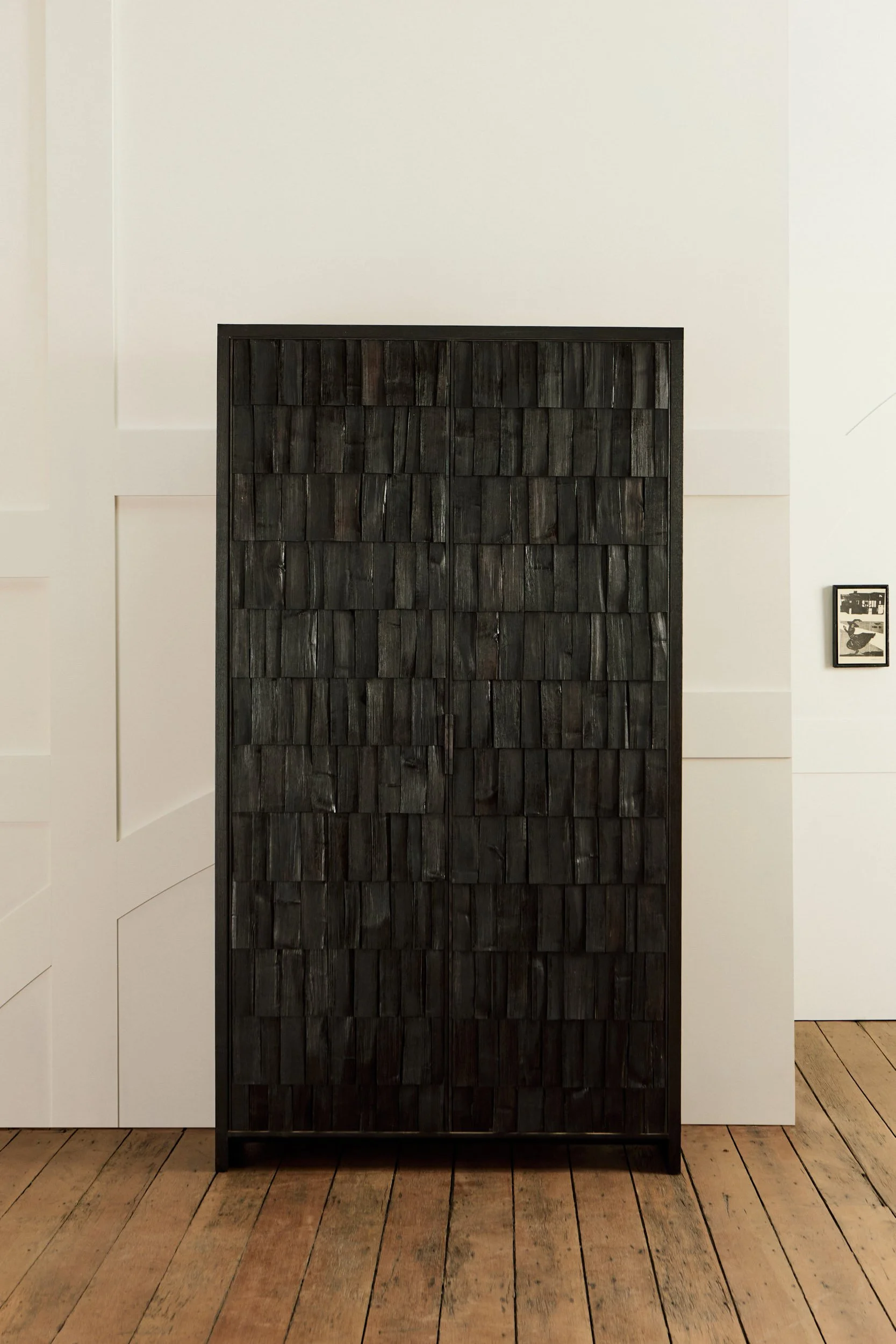
Hand-cleft, hand-scorched. Meet our new Cleft cabinet, rich in texture and quiet drama.
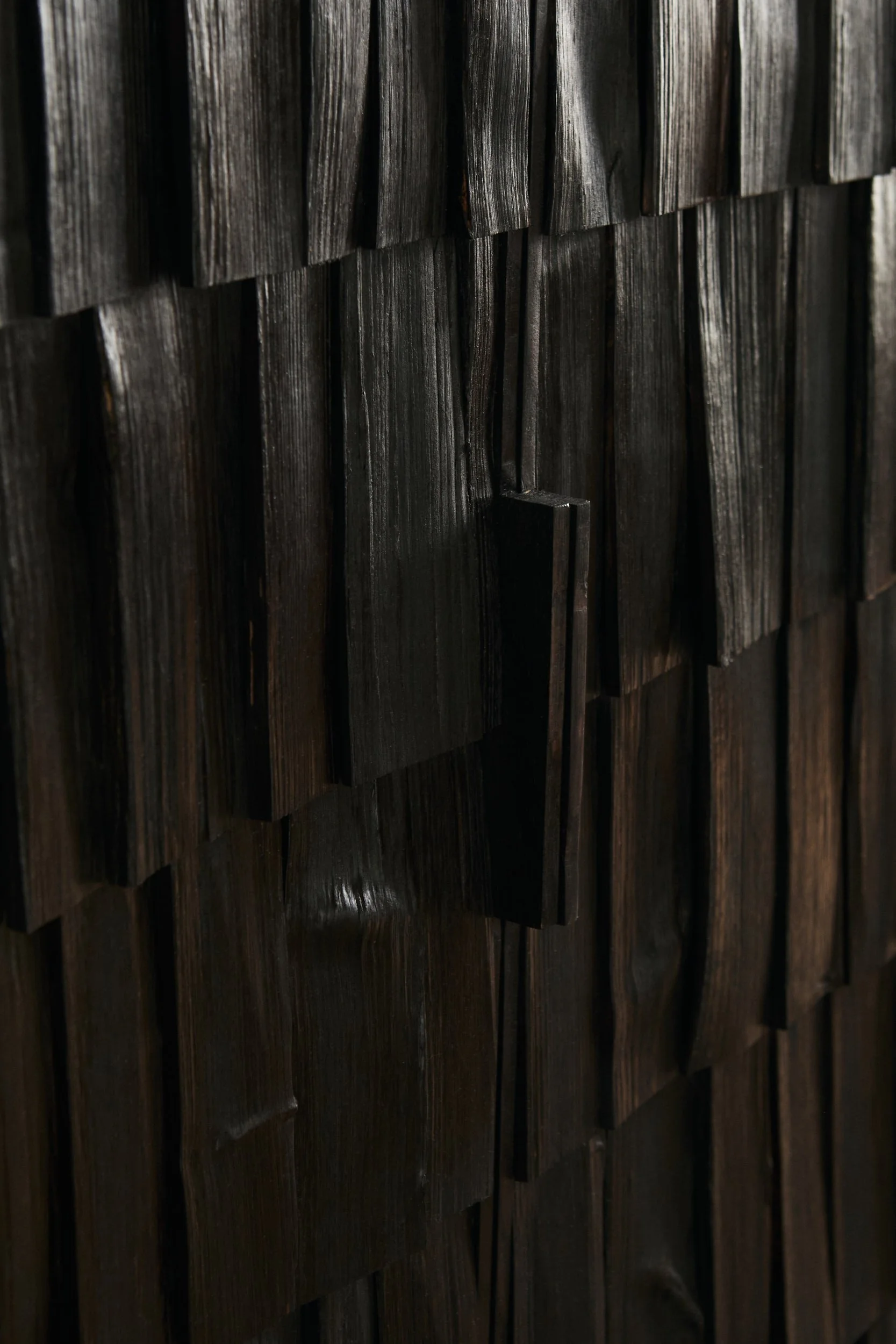
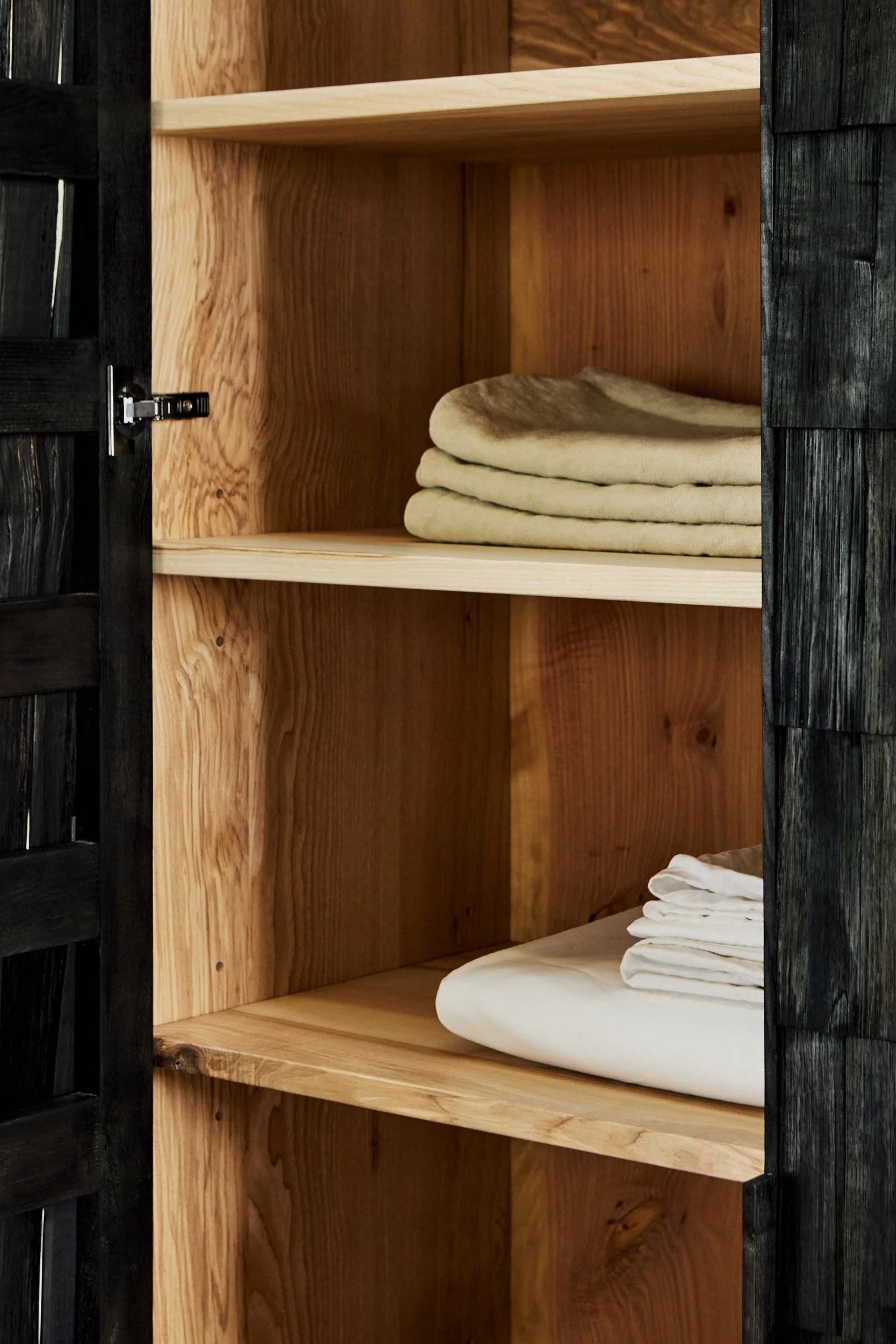
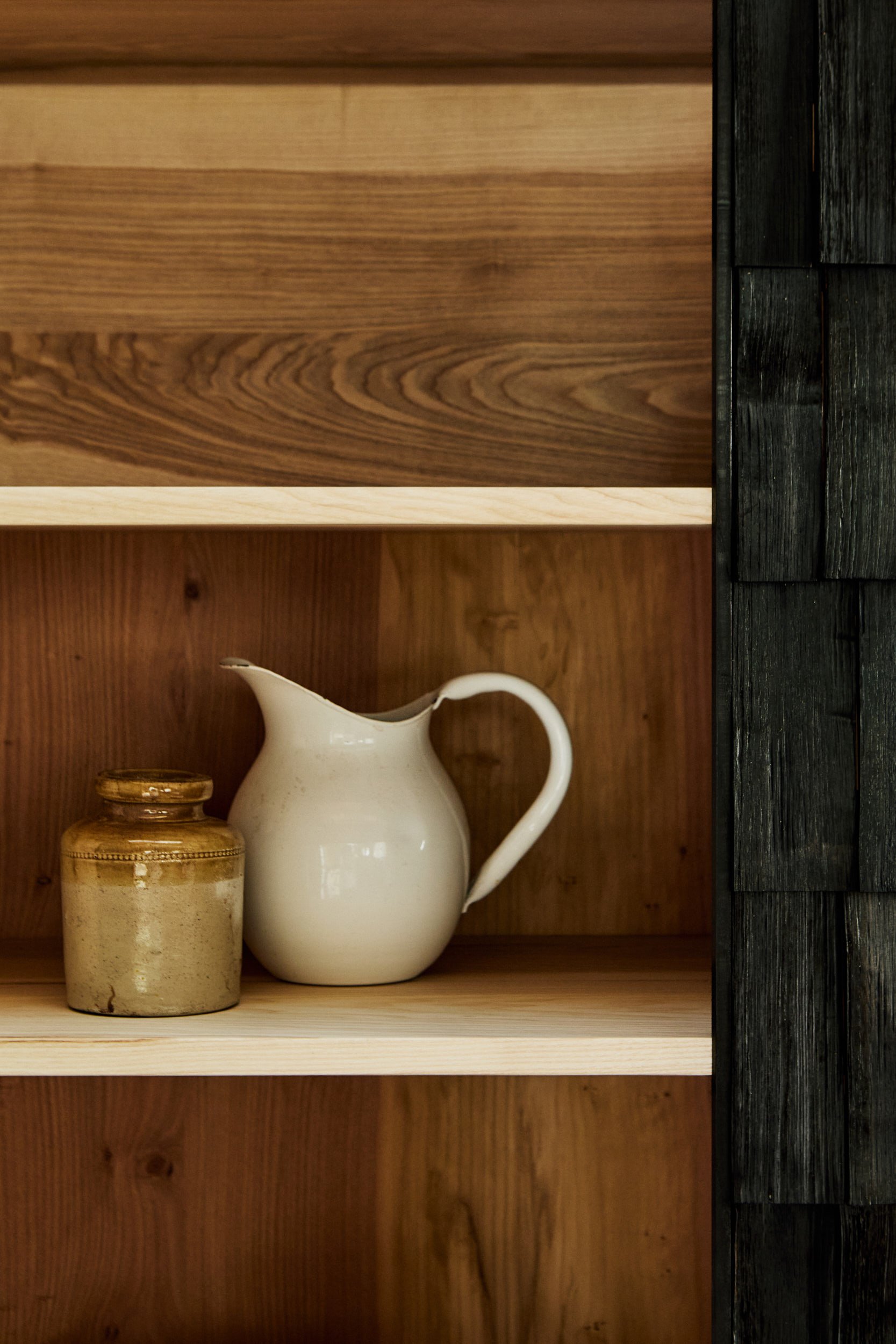
A tableau of chestnut shakes, harvested from our own woodland, cleft and individually scorched, cover the doors. These are framed within a handsome dovetailed solid ash carcass.
Splitting, cleaving or riving wood was how all wood was worked along its length prior to the saw. And after the saw, cleaving persisted for its efficient use of material, as there is no waste in dust, and its stength and durability, as the cleft face follows the line of the tree’s fibres.
When we split wood, by hand, we reach deep into prehistory for the skill and material understanding required to create and control a fault through the fibres of wood. There are no modern shortcuts to this primal process, and that is one of the reasons it’s so beauitful to learn. A log split, or cleft or riven, into halves, quarters, sixteenths even, is easy. But taking sixty-four useful tiles from one short log, requires hand-eye, hand-ear, and deep haptic coordination. The wood ticks, clicks and quietly cracks as its fibres separate. The split always wants to run out of the thinnest side, so sensing this bias early and pulling tension into the thicker side is essential to a good split. It takes time to learn to perceive this early enough to make good shakes. I marvel at how advanced our woodworking forefathers were to have mastered cleaving at a speed we cannot near as we get into the swing of splitting shakes from a piece of ash or chestnut.
The varied surface that comes from cleaving is completely unique to the tree’s growth. No two faces are the same. When composed into a panel, they give a gentle undulation and texture that calms light and softens sound. Designing a cabinet around this process gives us time to experience wood in a primal way during its making, and that lives on in the soul of the piece.