A love letter to weave
“Saw it thinly, celebrate the flexibility of the fibres, show its strength at its most vulnerable dimensions.”
In the very first projects I designed, during my MA working with coppiced wood, I was limited to working with wood from narrow stems. To make a wider panel required some imaginative thinking, and it was within this self-imposed constraint that I started to saw the wood thinly, and weave it together. What followed was a new aesthetic; light, breathing, ordered and entangled. It represents the sensitivity and reverence with which we handle our material.
It also solved a problem which we also encounter as a furniture makers who shuns veneers - how to create curves and bends in an elegant way. We could employ this technique widely and it began to influence most of our designs.
Over the last decade and a half we’ve made numerous projects with woven wood, from our award-winning kitchen with deVOL, through to screens, desks, and treehouses. Each one of them has our unique hallmark.
I still adore every woven piece that I see going through our workshop, seeing our apprentices learn the point between fragility and strength of the different species of British-grown hardwood, through weaving. Every maker will have experienced the pleasure of pulling the weft through the warp in one smooth action, and then felt the frustration of the next strip snapping over some short grain. It’s a process that keeps us deeply connected to the fibres of the trees that gave us the wonderful timber we adore working with.
As some species, like ash, face a scarcer future, it feels like an appropriate way to use their precious fibres, making many square meters of panel with a single board. Perhaps this is the approach we’ll need to take in a future that holds uncertainty for what will grow in a chaotic climate. Trends in design come and go, but weaving will remain a constant for us for many decades to come.
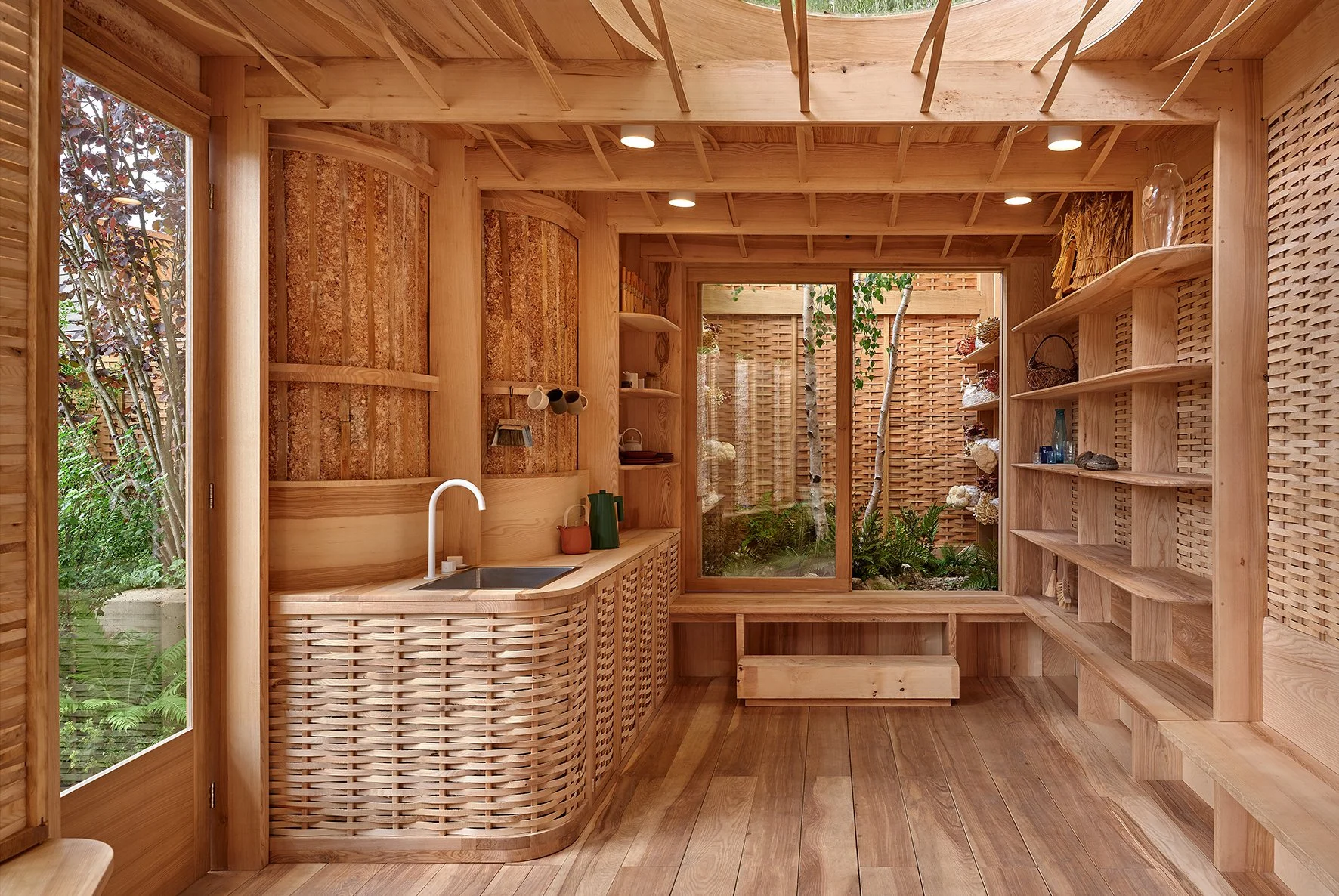
The Mycelium Pavilion at Chelsea Flower Show
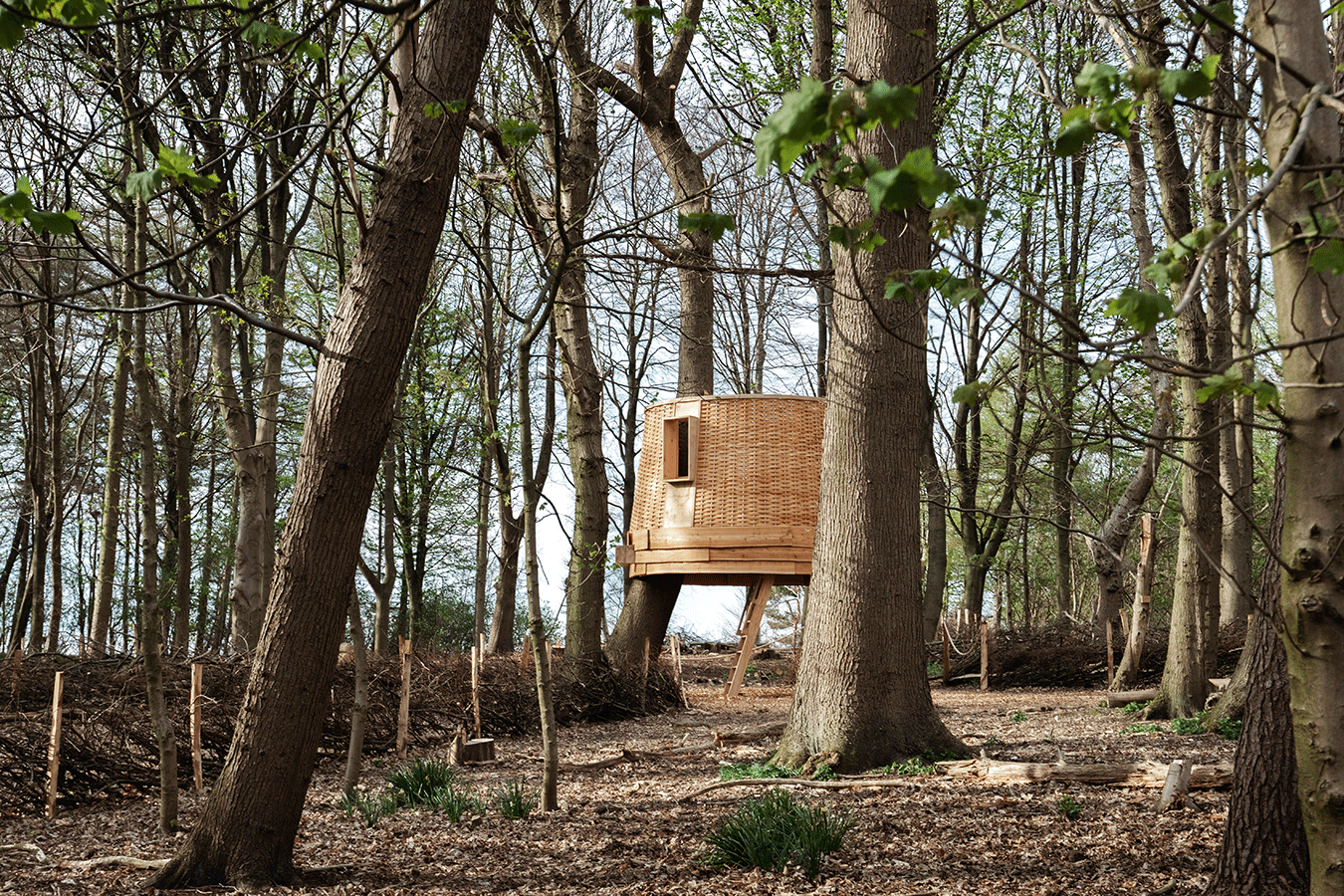
Sylvascope at Harewood House

The Burberry Balloon
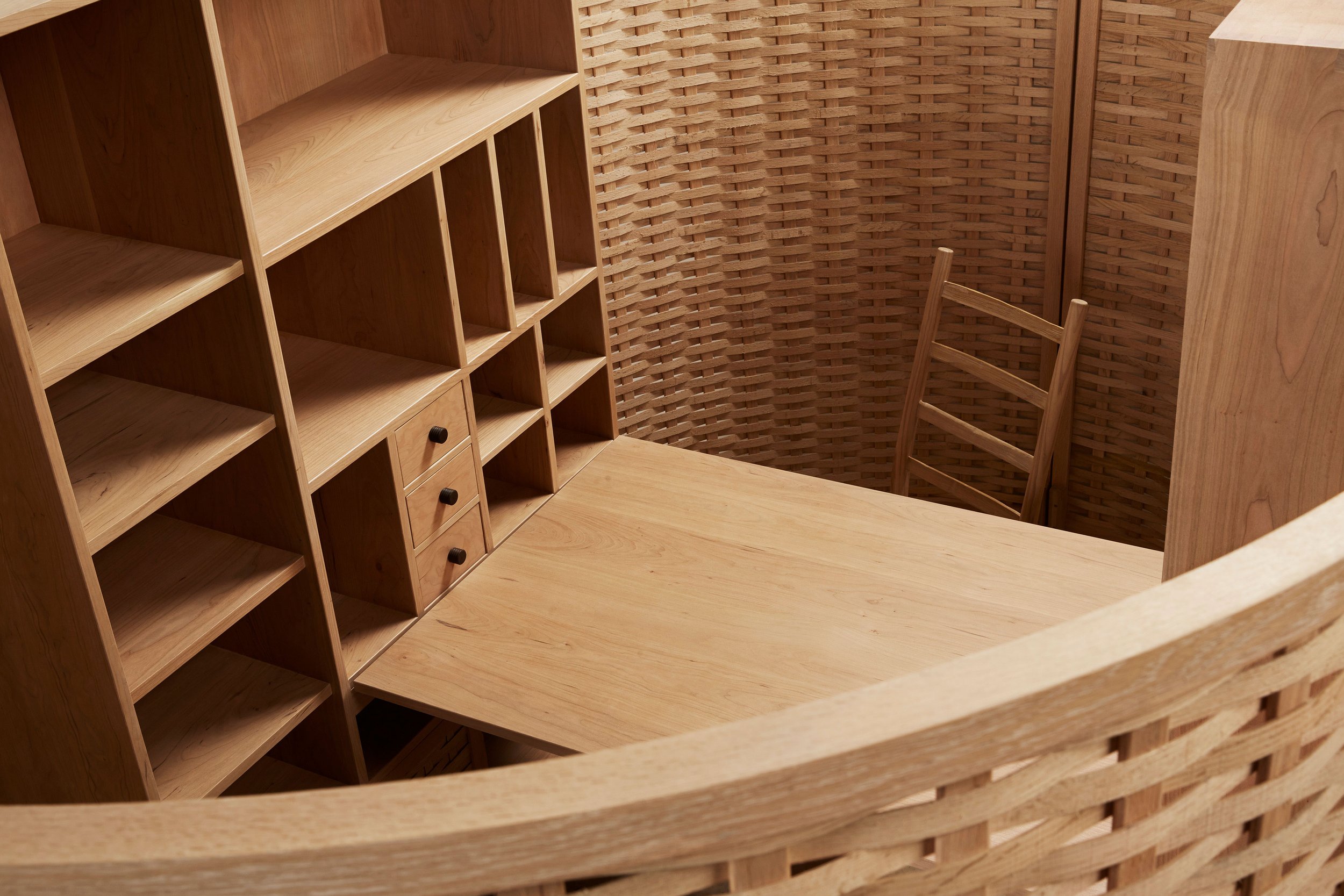
Getting away from it all for Terence Conran
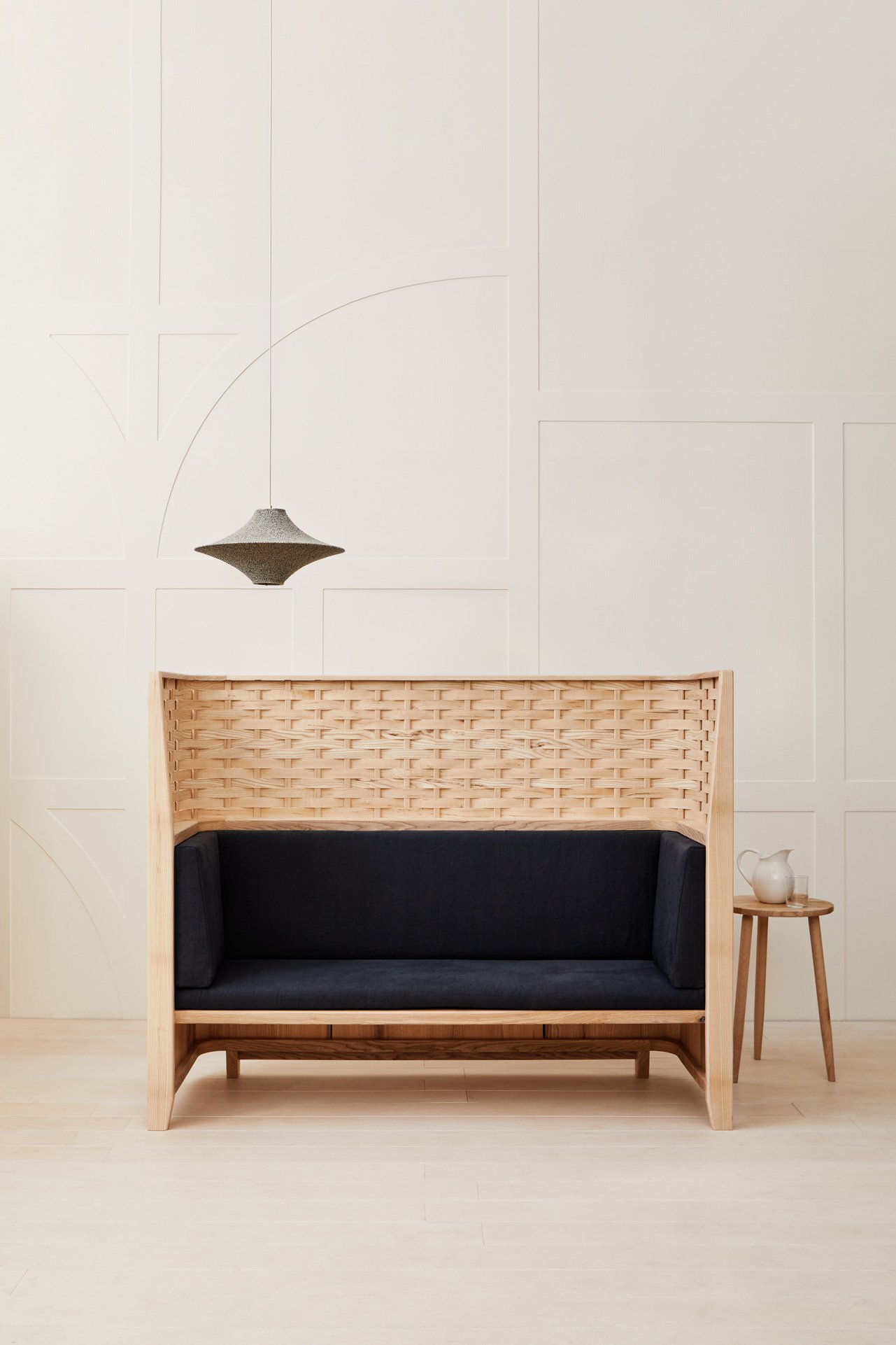
The Bayleaf settle provides a cocooning place to sit; visually, acoustically and comfortably soft. The frame is made from solid English ash, woven with flexible strips of English ash, in our workshop. The Bayleaf settle can be upholstered in your own fabric (customer’s own material, COM) or fabric supplied by us. Listed price includes the upholstery cost, but excludes fabric.
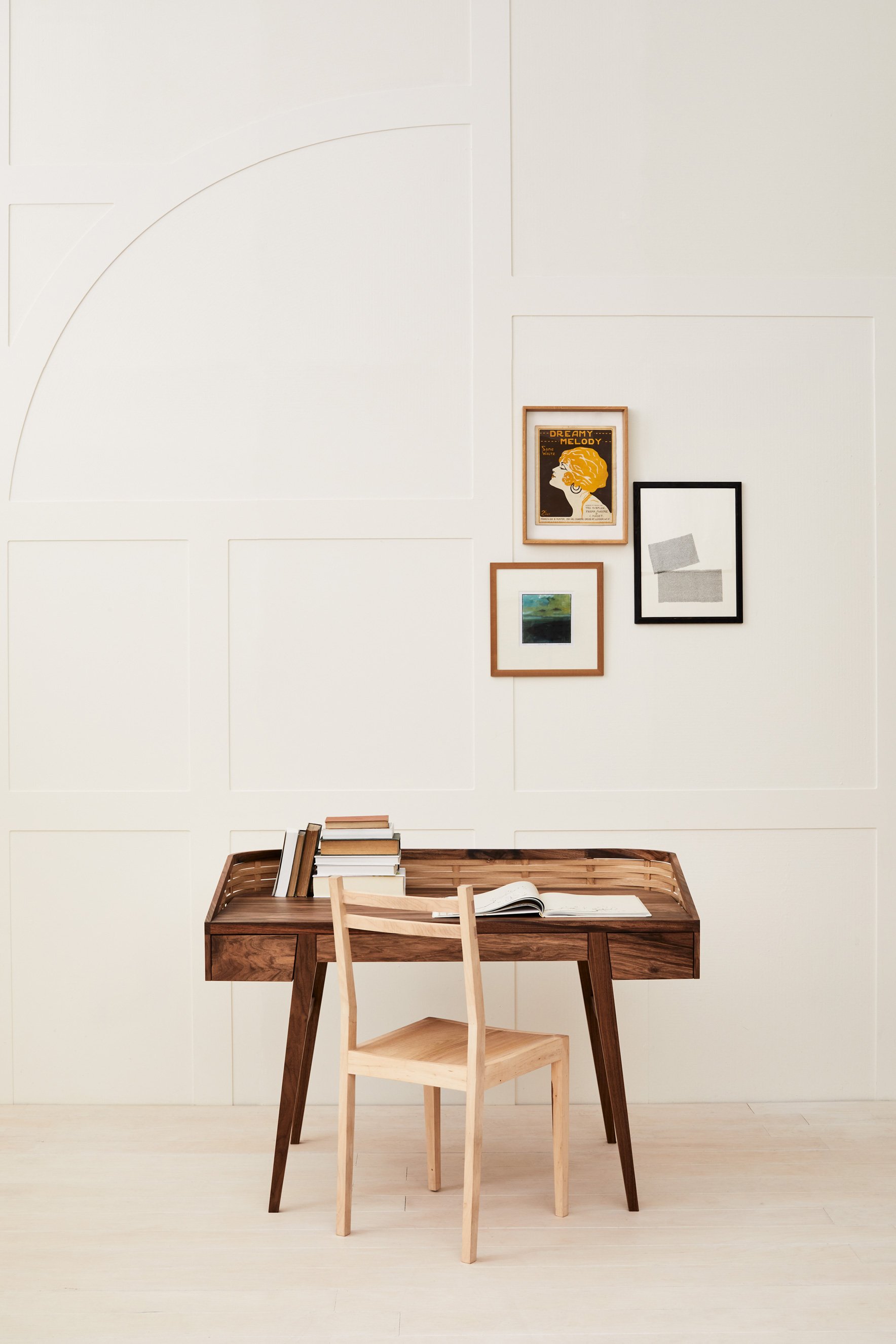
The Bayleaf desk provides a cocooning workspace, rich in material texture. The elegantly tapered legs, three dovetailed drawers and wrap-around woven collar are made in our workshop from solid English walnut and woven English oak. Each drawer features a solid, aromatic British cedar drawer bottom.
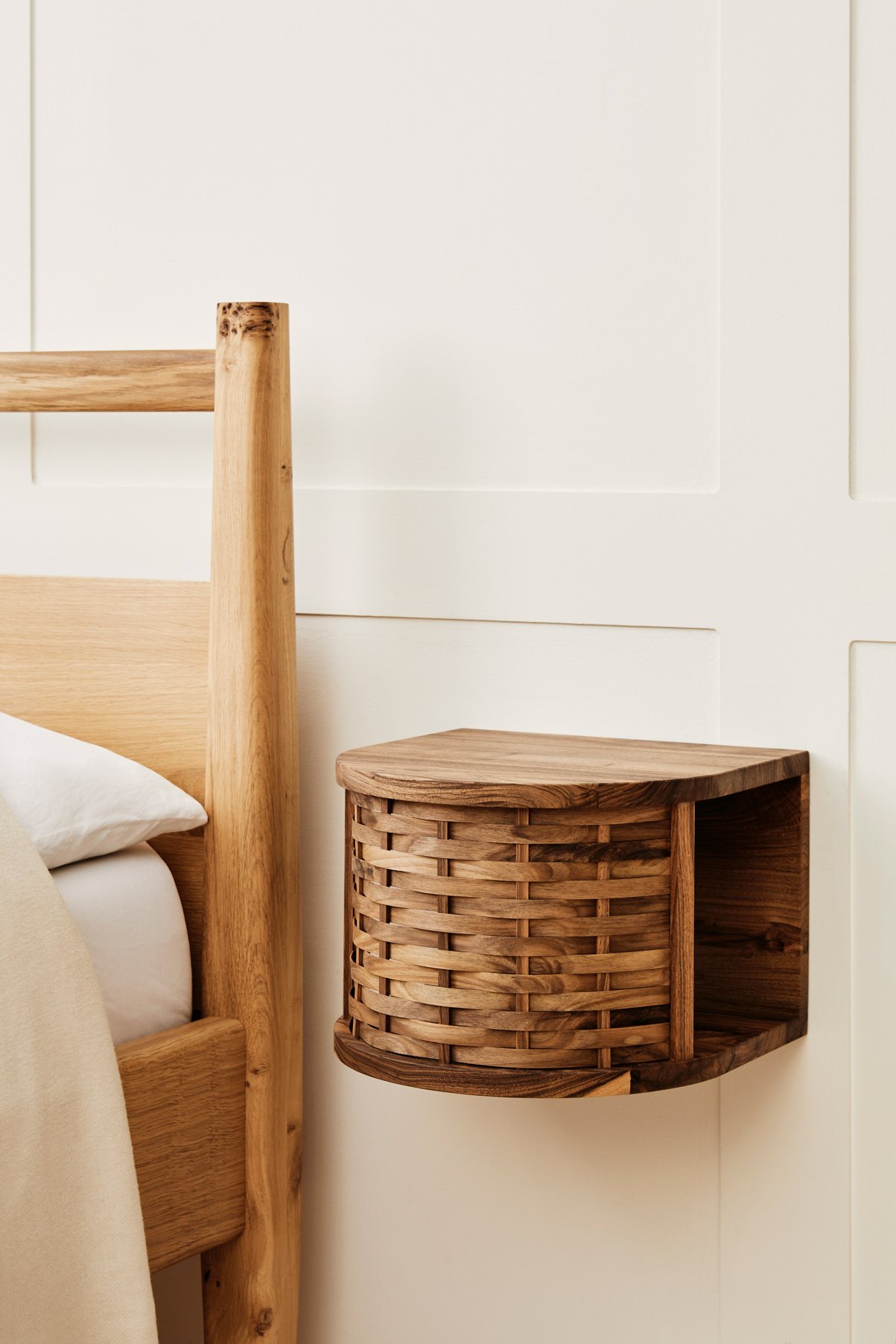
The Bayleaf floating bedside table is a wall hung shelf perfect for a cup of morning tea or evening read, with storage space beneath, partially hidden from view by a woven front panel. Every bedside table is made entirely from solid English-grown walnut or sycamore.